The South Coast is where an Iceland day can change character in minutes: a quiet waterfall trail, a black-sand shoreline under Atlantic wind, then a glacier view beyond green farmland. It is one of the country’s most rewarding routes, but it is not a day to rush. This South Coast travel guide is designed for travelers who want to see the major highlights with the comfort, timing, and flexibility to enjoy them properly.
For couples, families, and small private groups, the best experience usually comes from planning less around a checklist and more around the day’s real conditions. Weather, daylight, walking pace, and road conditions all affect what makes sense. A private vehicle and professional driver give you room to adjust without the pressure of keeping up with a large bus group.
How Far Is Iceland’s South Coast?
Most South Coast day trips begin in Reykjavík and follow Route 1 east. The first major waterfall, Seljalandsfoss, is about two hours away in favorable conditions. Continuing to Reynisfjara Black Sand Beach and Vík creates a full-day journey, commonly eight to 10 hours depending on stops, traffic, and weather.
Adding Fjaðrárgljúfur canyon, Skaftafell, or Jökulsárlón Glacier Lagoon turns the route into a longer day or, preferably, an overnight trip. Glacier Lagoon is spectacular, but it sits roughly five hours from Reykjavík each way before sightseeing time. It can be done in one ambitious private day during long summer daylight, though it is not the right choice for every traveler.
The practical decision is simple: if your priority is a relaxed day with waterfalls, a black-sand beach, and time in Vík, stay within the western South Coast. If the lagoon is a must-see, allow more time and be prepared for a long but memorable drive.
Build Your South Coast Travel Guide Around the Right Stops
A well-paced private itinerary normally includes three to five major stops, rather than every named attraction on the map. The route is scenic throughout, and unplanned photo stops can be just as rewarding as the headline locations.
Seljalandsfoss and Gljúfrabúi
Seljalandsfoss is famous because visitors can walk behind its 200-foot curtain of water. The path can be slippery, and the spray is constant, so waterproof outer layers and shoes with good grip make a meaningful difference. The trail behind the waterfall is generally best enjoyed when conditions are calm and daylight is sufficient.
A short walk away, Gljúfrabúi sits partly hidden inside a narrow gorge. Entering involves stepping through shallow water or across stones, depending on conditions. It is a beautiful stop, but travelers who prefer an easier walk can enjoy Seljalandsfoss and continue without missing the spirit of the day.
Skógafoss and the Skógar Area
Skógafoss offers a different scale. You can admire it from ground level, where mist often creates rainbows, or climb the staircase beside it for views across the coast. The staircase is worthwhile for active visitors, but it is not essential. Families with young children and travelers with limited mobility may prefer to stay at the base and allow time for photographs.
Nearby Skógar is also a sensible point for a comfort break before continuing east. On a private tour, the timing can follow your group’s needs rather than a fixed bus schedule.
Dyrhólaey and Reynisfjara Black Sand Beach
Dyrhólaey is a dramatic headland with broad coastal views, seabirds in season, and a striking natural rock arch. Access can be limited by weather or seasonal nesting protections, so it works best as a flexible stop rather than a guarantee.
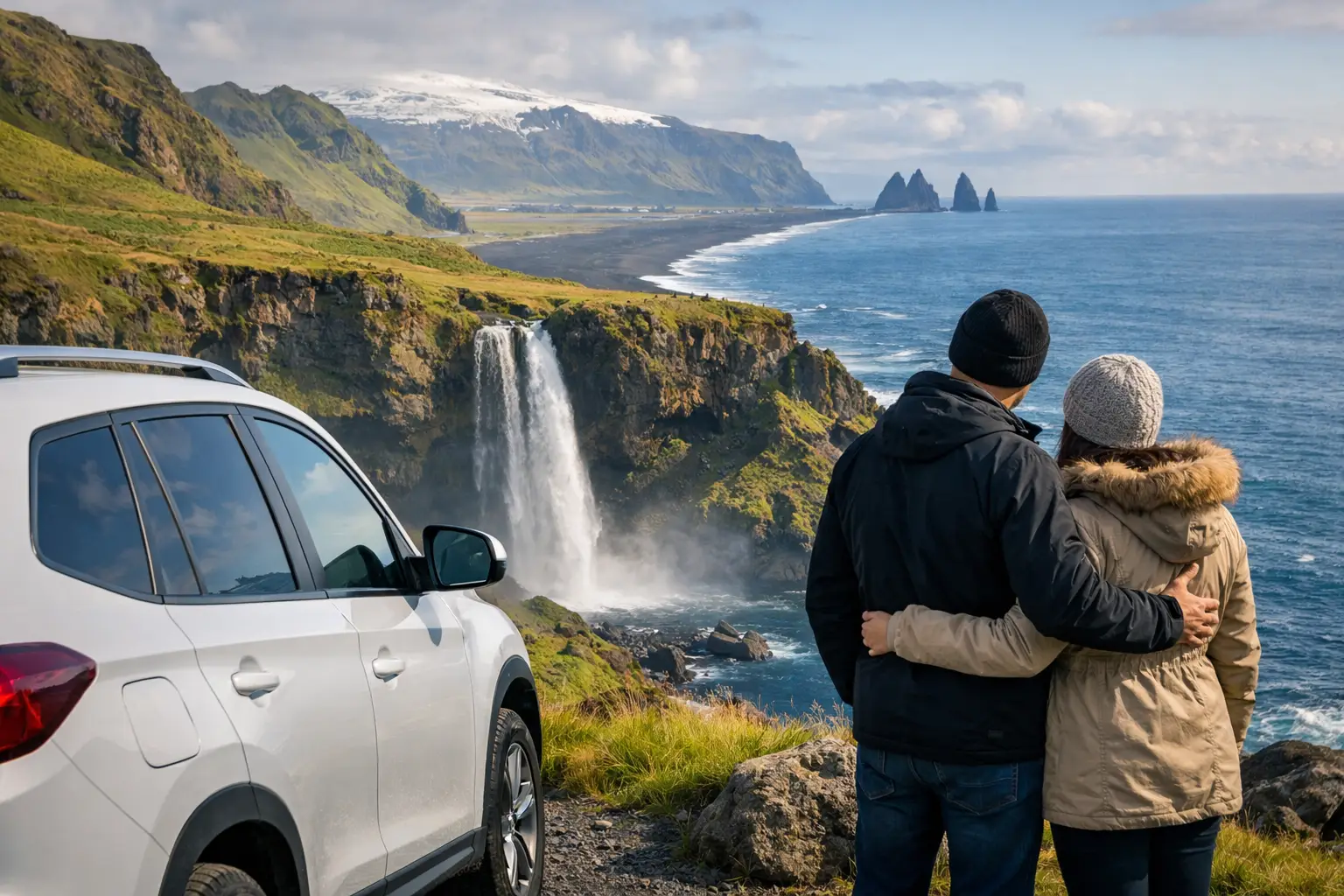
Reynisfjara is the South Coast’s best-known black-sand beach, recognized for its basalt columns, sea stacks, and powerful waves. It is also a place where safety must come before the photograph. Never turn your back on the ocean, stay well away from the waterline, and follow local warning signs. So-called sneaker waves can arrive suddenly and with far more force than they appear to have from a distance.
A professional driver can help your group arrive at a less crowded moment when the day allows, but no schedule changes the need to respect the sea.
Vík and the Views Beyond
Vík is a natural lunch stop and a convenient place to reset before the return journey. The village has views toward Reynisdrangar sea stacks and the surrounding mountains, while the nearby church offers a classic overlook in clear weather.
If road conditions and time are favorable, the drive can continue toward the moss-covered lava fields, Fjaðrárgljúfur canyon, or farther east. These additions are best selected according to your priorities. A family traveling with children may prefer more time at the waterfalls and a relaxed meal. Honeymooners may want to continue for quieter landscapes and fewer rushed stops.
When to Visit the South Coast
Every season has an advantage, and the best choice depends on what you value most. Summer brings the longest days, greener landscapes, and easier driving conditions. It is ideal for travelers who want to include more stops, walk longer trails, or travel as far as Glacier Lagoon. It is also the busiest period, particularly at the most famous waterfalls and beaches.
Spring and fall can offer softer light, fewer visitors, and a more intimate atmosphere. Conditions are more variable, however, and daylight hours are shorter. A flexible plan matters more at these times of year.
Winter creates a striking contrast of snow, dark beaches, and low golden light. It can also bring wind, ice, road closures, and rapidly changing visibility. Winter South Coast travel is often more comfortable with a private driver who monitors conditions and can adjust the route responsibly. The goal is not to cover the maximum distance. It is to have a safe, enjoyable day with realistic expectations.
What to Wear and Bring
Icelandic weather can feel colder than the temperature suggests, particularly near waterfalls and the coast. Dress in layers that can be added or removed easily. A waterproof outer jacket, warm mid-layer, hat, gloves, and sturdy waterproof shoes are useful in every season. Even on a bright summer day, wind and spray can arrive quickly.
Bring a reusable water bottle, a small snack, and a power bank for your phone or camera. For waterfall stops, keep a lens cloth handy. If you are traveling with children, have an extra layer within easy reach rather than packed at the bottom of a suitcase.
There is no need to overpack the vehicle for a day tour. Comfort comes from having the essentials accessible and leaving room to move easily between stops.
Self-Drive or Private South Coast Tour?
Self-driving gives independent travelers control, and it can work well for experienced drivers who are comfortable with changing weather, unfamiliar roads, and a full day behind the wheel. In summer, it is a popular option for visitors who want to set their own pace.
The trade-off is that the driver spends part of the trip focused on navigation, parking, fuel, road updates, and conditions rather than the scenery. In winter or during unsettled weather, that responsibility becomes more significant. Rental-car insurance, wind exposure, and the stress of reaching stops before darkness can also shape the experience.
A private tour is especially valuable when you want door-to-door pickup, local route knowledge, and the freedom for everyone in your group to enjoy the journey. It also makes pacing easier. You can spend longer at a favorite waterfall, stop for a scenic view, or shorten a walk when the weather changes. Iceland Direct Tours can tailor a South Coast itinerary around your group size, interests, pickup time, and preferred level of activity.
Plan for Conditions, Not Just Clock Time
A successful South Coast day has a clear framework without becoming rigid. Start early when possible, especially in summer and on dates when popular sites are busy. Early departure often means quieter trails, easier parking, and more time to respond to weather changes later in the day.
Check conditions on the morning of travel and accept that the order of stops may change. If heavy rain is moving toward Vík, a driver may suggest visiting the beach earlier. If winds are strong at the coast, a longer waterfall stop or a warm lunch break may be the better choice. This is not lost time. It is thoughtful travel planning.
Leave some space in the schedule for the moments that are hard to predict: a rainbow at Skógafoss, a clear view from Dyrhólaey, or a family member who simply wants another 10 minutes to take it all in. The South Coast rewards travelers who move with the landscape rather than against it.
Choose a route that fits your day, dress for changing conditions, and give each stop the time it deserves. That is how the South Coast feels less like a series of stops and more like the Iceland journey you came for.