The South Coast is where an Iceland day trip can feel wonderfully full without needing to feel rushed. A black-sand beach, two major waterfalls, glacier views, and dramatic sea cliffs can all fit into one well-planned day. This guide to south coast excursions helps you choose the right route, pace, and transportation for a comfortable experience that leaves room to enjoy the places you came to see.
For many visitors, this is Iceland’s essential full-day journey. The route follows the Ring Road east from Reykjavík, with sights spread across a long but highly rewarding stretch of coastline. The difference between a memorable day and an exhausting one usually comes down to realistic timing, weather awareness, and having the flexibility to stop when conditions are at their best.
What a South Coast excursion can include
Most South Coast excursions begin with a pickup in Reykjavík and travel along Route 1 toward Vík. The core route is straightforward, but the day is not short. Expect roughly 10 to 12 hours for a comfortable private trip from Reykjavík, depending on the stops you choose, road conditions, and the season.
The classic itinerary centers on Seljalandsfoss, Skógafoss, Reynisfjara Black Sand Beach, and the village of Vík. On a longer itinerary, it may also include the Sólheimajökull glacier area, Dyrhólaey viewpoint, or a farther drive toward Fjaðrárgljúfur canyon. Each stop offers something different, so the best choice is not necessarily to see every location. It is to build a day that matches your interests and energy level.
Seljalandsfoss and Gljúfrabúi
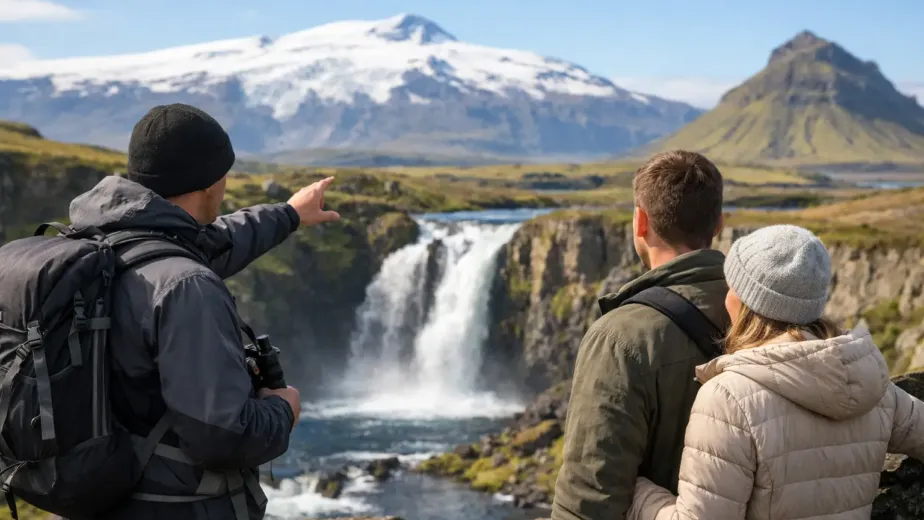
Seljalandsfoss is known for the path that leads behind the waterfall. When the path is open and conditions allow, it gives you a rare perspective through the falling water toward the surrounding landscape. Waterproof outer layers and shoes with good grip make a noticeable difference here, since spray can be constant and the path may be slippery.
A short walk away, Gljúfrabúi is partially hidden inside a narrow gorge. Reaching it can involve stepping through shallow water or across stones, which makes it a better fit for travelers comfortable with uneven ground. If accessibility or dry footwear matters more than a close-up experience, Seljalandsfoss alone is a beautiful and practical stop.
Skógafoss and the Skógar area
Skógafoss is one of Iceland’s most powerful and photographed waterfalls. It is easy to admire from the base, where mist often creates rainbows on sunny days. Travelers who want a bigger view can climb the staircase beside the falls, though the steps are steep and can be challenging in wind, rain, or icy conditions.
The surrounding area is also a useful place for a break. A private driver can adjust the schedule for coffee, lunch, or extra time at the waterfall rather than moving on according to a fixed group-tour timetable.
Sólheimajökull glacier and Dyrhólaey
The Sólheimajökull area provides a close look at one of Iceland’s outlet glaciers. Even without a glacier hike, the walk toward the glacier lagoon offers dramatic views of ice, dark volcanic ash, and changing terrain. It is a worthwhile addition for travelers who want to see a glacier at close range, but conditions can be windy and the walking surface is uneven.
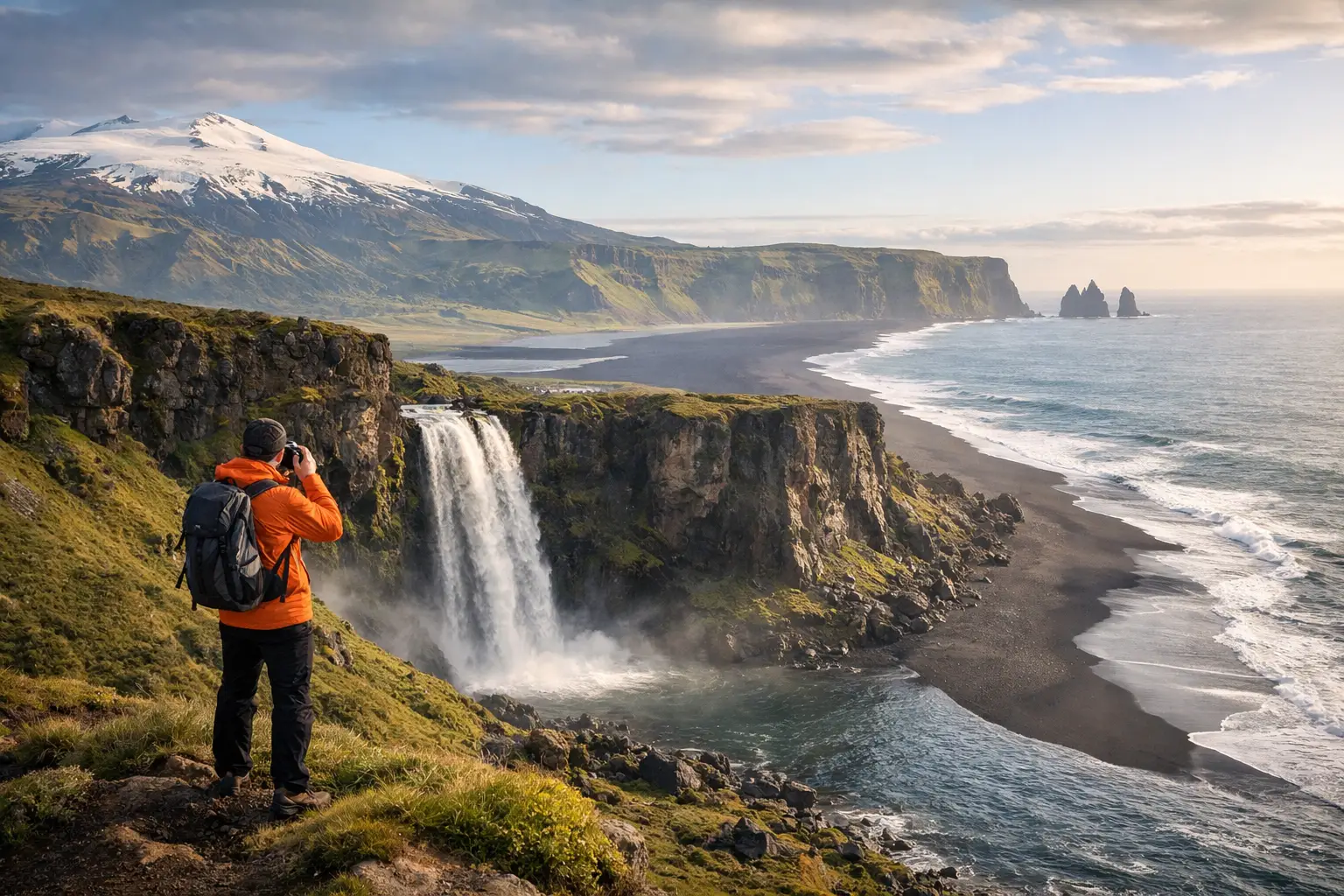
Dyrhólaey is a coastal promontory with wide views over Reynisfjara and the southern shoreline. In summer, it can also be a good place to look for puffins from a respectful distance. Access may be restricted at certain times for bird nesting or due to weather, so it should be treated as a flexible stop rather than a guaranteed one.
Reynisfjara Black Sand Beach and Vík
Reynisfjara is striking for its black volcanic sand, basalt columns, sea stacks, and powerful Atlantic waves. It is also a place where safety instructions must be taken seriously. Sneaker waves can arrive unexpectedly, and visitors should stay well back from the waterline, watch the ocean continuously, and never turn their back on the sea.
Vík is a natural turnaround point for many South Coast day trips. The village offers views of the Reynisdrangar sea stacks, practical dining options, and a chance to pause before the drive back to Reykjavík. For travelers who prefer a calmer day, Vík can be the final major stop rather than adding more driving farther east.
How to plan a private South Coast excursion
A private South Coast excursion is particularly valuable when you want control over the day. You can leave early to avoid the busiest times at popular stops, spend longer at the sights that matter most, and reduce time at places that do not suit your group. This is helpful for families with children, couples on a limited Iceland itinerary, and travelers who do not want to manage winter driving.
Start by deciding whether your priority is scenery, photography, light walking, or simply seeing Iceland comfortably. Photography-focused travelers may want an early departure and more time at Dyrhólaey or Reynisfjara. Families may prefer fewer stops, regular restroom breaks, and a relaxed lunch in Vík. If you are traveling in winter, a more focused route is often wiser than trying to cover every possible attraction during limited daylight.
Your vehicle choice matters as well. A private tour should provide enough space for the group, warm and comfortable seating, and room for outerwear, snacks, and camera equipment. For small groups, per-vehicle pricing can also offer clearer value than paying individual rates on a large coach tour.
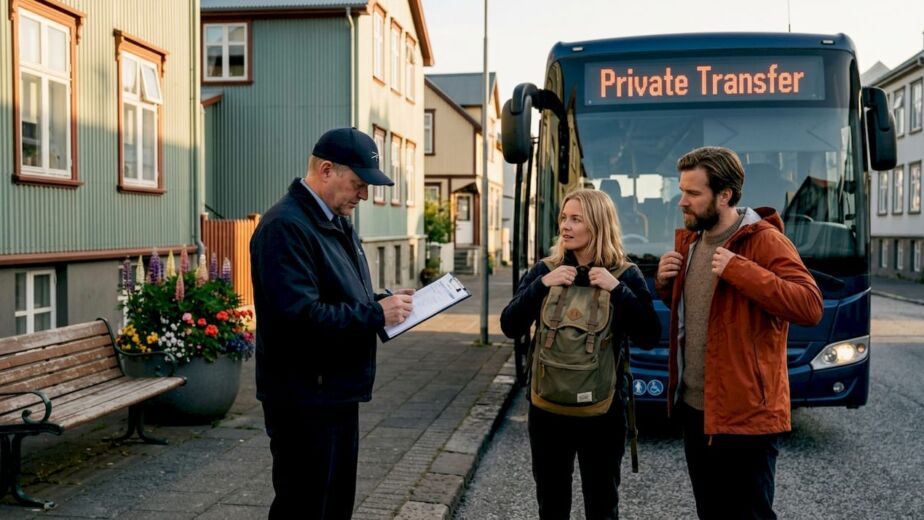
Professional local drivers add more than transportation. They monitor road and weather conditions, understand where wind can affect access, and can adapt the order of stops when needed. Iceland Direct Tours builds private itineraries around that flexibility, with direct pickup and a pace suited to your party rather than a crowded bus schedule.
Timing, seasons, and weather on the South Coast
Summer brings long daylight hours, greener landscapes, and more options for extending the route. It is the best season for travelers who want unhurried stops, easier walking conditions, and the possibility of adding Dyrhólaey or a farther east destination. The trade-off is higher visitor numbers, especially from late morning through the afternoon.
Winter has a different appeal. Waterfalls can be framed by snow and ice, crowds are often smaller, and a private vehicle removes much of the pressure of unfamiliar road conditions. However, daylight is limited, weather can change quickly, and some paths or viewpoints may close. A winter South Coast tour should be planned with flexibility rather than a rigid checklist.
Spring and fall can offer a strong balance of manageable crowds, changing colors, and more daylight than midwinter. They can also bring rain, wind, and variable road conditions. No season guarantees clear skies, but Iceland’s shifting weather is part of the experience when you are dressed correctly and traveling with a sensible plan.
What to wear and bring
The South Coast can be colder and windier than Reykjavík, even in summer. Layers are more useful than one heavy garment because temperatures can change throughout the day. A waterproof jacket and pants, insulated mid-layer, hat, gloves, and sturdy waterproof shoes are sensible in every season.
Bring water, small snacks, and a portable charger, especially if you plan to take photos throughout the day. Sunglasses are useful for low winter sun and bright summer reflections. If you are visiting waterfalls, keep a microfiber cloth or protective cover ready for your phone or camera lens.
Do not rely on a forecast from the previous evening. Conditions can shift during the drive, and coastal wind can feel much stronger than expected. A flexible itinerary allows the day to work with the weather instead of fighting it.
Choosing the right pace for your group
There is no single best version of the South Coast. A couple celebrating a honeymoon may want extra time for photographs and a scenic lunch. A family may prefer a straightforward route with short walks and dependable stops. Travelers with limited mobility can still enjoy major viewpoints and waterfall areas, though access varies by site and should be discussed before departure.
Avoid trying to turn one day into an all-of-south-Iceland itinerary. Adding Jökulsárlón Glacier Lagoon and Diamond Beach to a Reykjavík day trip creates a very long drive and leaves little time to enjoy the stops. It can work for travelers comfortable with a demanding schedule, but an overnight stay is usually the better choice for that eastern extension.
The strongest South Coast day is one that feels cared for, not crowded. Leave space for a second look at a waterfall, a warm drink in Vík, or a weather-driven change of plan. Those unplanned moments are often the ones you remember most clearly.