TL;DR:
- Structured multi-stop tours allow travelers to efficiently see Iceland’s sights without logistical stress by pre-arranging transportation, accommodations, and reservations. They also save time and money by minimizing backtracking and simplifying bookings, optimizing route pacing for an immersive experience. However, flexibility and buffer days are essential to accommodate unpredictable weather and spontaneous moments, ensuring a rewarding journey.
Iceland gives you volcanoes, glaciers, geysers, and waterfalls all on one island, but the country is deceptively large. The Ring Road alone stretches over 800 miles, and most travelers land with a week or two and a mental list that could fill a month. The real challenge is not choosing what to see. It is figuring out how to see it all without burning out on logistics or spending half your trip staring at a map. Multi-stop tours solve that problem directly by building the route, the timing, and the transitions into a single coherent plan, so every day feels purposeful instead of improvised.
Table of Contents
- Streamlining your Iceland adventure: How multi-stop tours maximize efficiency
- Saving time and money: Booking advantages of multi-stop itineraries
- Maximizing sightseeing: Smarter pacing and route design in Iceland
- Important considerations: Flexibility, weather, and spontaneity
- Our take: The real value and hidden trade-offs of multi-stop tours in Iceland
- Plan your perfect Iceland tour with Tripiceland
- Frequently asked questions
Key Takeaways
| Point | Details |
|---|---|
| Efficiency gains | Multi-stop tours in Iceland save you time and stress by organizing transport, lodging, and attractions for you. |
| Booking made easy | Combining destinations into one itinerary cuts complexity and can lower your travel costs. |
| Smart pacing | Planned routing lets you spend more time exploring and less time driving. |
| Be ready for surprises | Buffer time protects your trip from Iceland’s weather, while some flexibility helps you capture unplanned adventures. |
Streamlining your Iceland adventure: How multi-stop tours maximize efficiency
The biggest drain on any Iceland trip is not the distance. It is the daily decision fatigue. Where do we eat? Which road is passable? Is this the right turnoff? When you are making those calls from scratch every morning, you lose hours that could be spent standing next to Skógafoss or watching puffins at Látrabjarg.
Multi-stop tours eliminate that friction by pre-arranging the essentials before you ever land. Transportation is confirmed, accommodations are waiting, and the sequence of sites is already optimized for the route. You step off the plane and follow the plan.
Here is what a well-structured multi-stop itinerary handles for you:
- Transportation between each stop, including road type, estimated drive time, and any fuel or rest considerations
- Accommodations at logical overnight points so you never drive exhausted to find a guesthouse
- Admissions and reservations at high-demand attractions like the Blue Lagoon or glacier hikes
- Contingency routing when weather forces a detour, which in Iceland is not a rare event
Multi-stop itineraries improve efficiency for sightseeing by pre-structuring transport, accommodation, and admissions, reducing time lost to planning and queues. That is not a minor benefit. On a 10-day trip, the hours saved on logistics can add up to an entire extra day of sightseeing.
“A well-mapped multi-stop tour turns Iceland’s scale from a problem into an asset. When the route is already built, every kilometer works for you rather than against you.” This framing captures why experienced travelers increasingly choose structured itineraries over piecing it together on the fly.
Reviewing tour logistics best practices shows a consistent pattern: travelers who pre-book a structured route report higher satisfaction because their expectations align with what they actually experience. For Iceland specifically, this matters because conditions change fast and having a pre-set plan removes the paralysis that comes with uncertainty.
If you want a deeper look at what well-run routes look like in practice, browsing bus tour planning tips from operators who know Iceland’s roads will give you a strong baseline. And if you want to see what those tours actually feel like on the ground, unforgettable bus tours offer a vivid picture of the experience.
Saving time and money: Booking advantages of multi-stop itineraries
Efficiency is not only about what you do once you arrive. It starts the moment you book. Organizing multiple trip legs under one reservation changes the entire workflow, and often the price.
Multi-stop planning can reduce backtracking and simplify the booking workflow by putting multiple legs under one reservation. That single change means fewer confirmation emails, fewer vendor contacts if something changes, and a single point of accountability when you need support.
Here is a side-by-side comparison that shows why it matters:
| Factor | Multi-stop booking | Separate one-way tickets |
|---|---|---|
| Number of reservations to manage | 1 unified booking | 3 to 7 separate bookings |
| Risk of missed connection | Lower, coordinated timing | Higher, gaps between vendors |
| Price transparency | All-in pricing upfront | Hidden fees accumulate |
| Insurance claim simplicity | Single booking reference | Multiple claims, multiple policies |
| Flexibility if one leg changes | Adjusted across all legs | Manual rebooking required |
| Backtracking risk | Minimized by route design | Common without expert planning |
The cost story is interesting because it is not just about the price tag. When you book separately, you often end up backtracking to cover gaps in the route. In Iceland, that might mean driving back toward Reykjavík from the south coast just to reach an accommodation you booked independently, adding 90 minutes of unnecessary driving each way. A unified booking eliminates that.
Understanding the group transfer workflow used by professional transport operators also reveals another layer of savings. Group coordination, luggage logistics, and drop-off sequencing are all planned in advance, so no one is waiting around or paying extra for ad-hoc arrangements.
For travelers focused on iconic routes, pairing this approach with solid Golden Circle tour tips ensures your bookings align with the actual geography rather than a wishful list.
Pro Tip: When you book all your legs under one reservation, your travel insurance claim becomes dramatically simpler. A single booking reference covers everything, rather than requiring you to document separate disruptions across multiple vendors. That clarity can save significant time if weather or road conditions force a change.
Maximizing sightseeing: Smarter pacing and route design in Iceland
Iceland rewards slow looking. A waterfall you drive past in five minutes is one you remember vaguely. A waterfall you spend 45 minutes at, walking behind the curtain of water or watching the light shift, stays with you. The difference between those two experiences is almost entirely a function of how the route is paced.
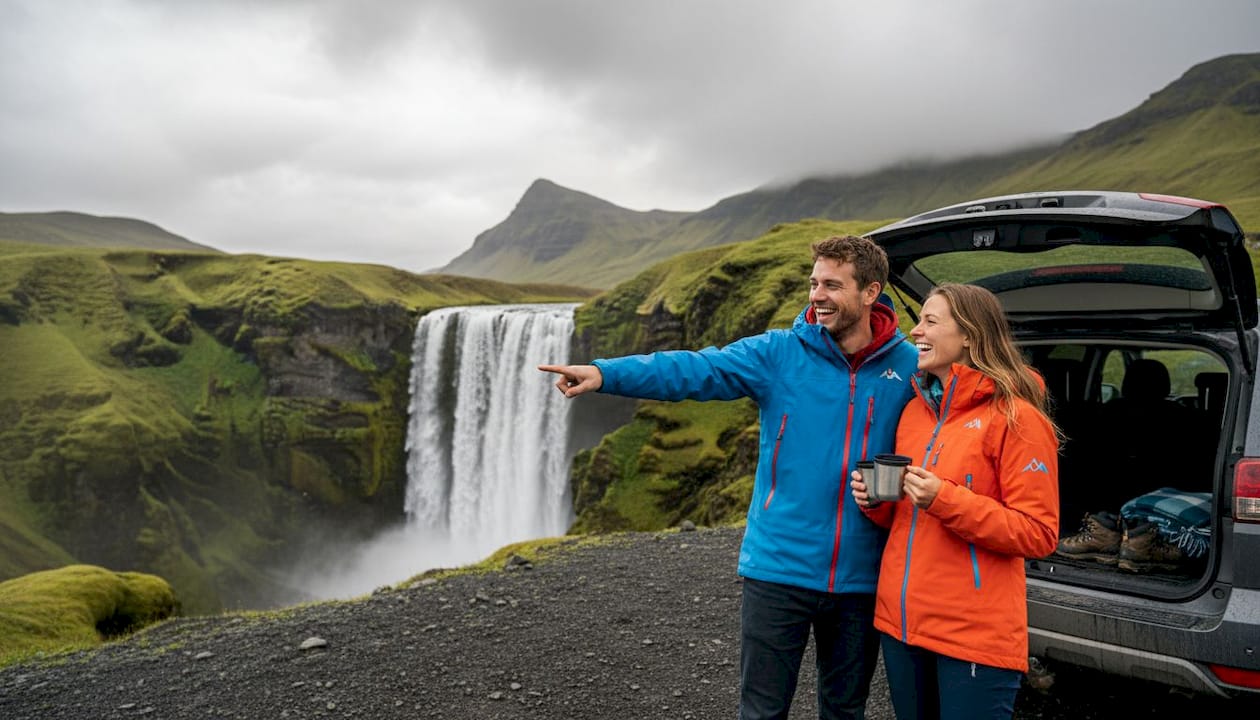
Multi-stop itineraries are specifically designed to give you that breathing room. Rather than covering maximum distance, they cover maximum experience. The route is spaced so that driving time stays manageable and sightseeing time dominates each day.
Ring Road pacing on a 10-day itinerary shows approximately 2 to 4.5 hours of driving on most days, with longer driving days separated by shorter ones. That rhythm prevents the fatigue that turns a dream trip into an endurance event.
Here is how smarter pacing translates into real benefits:
- More time at key sites means you can explore beyond the main viewpoint and find the angle no one photographs
- Less road fatigue means you actually want to get out of the vehicle at each stop instead of dreading another hike
- Better photo opportunities because you arrive at sites during the right light, not just whenever you happen to show up
- Improved safety because Iceland’s roads demand full attention, and tired drivers make mistakes on gravel F-roads or during sudden weather changes
The table below shows what the difference looks like in practice:
| Day type | Driving time | Sightseeing time | Sites covered |
|---|---|---|---|
| Paced multi-stop day | 2 to 3 hours | 5 to 6 hours | 3 to 4 quality stops |
| Unstructured driving day | 5 to 7 hours | 2 to 3 hours | 1 to 2 rushed stops |
| Non-stop transit day | 8 to 10 hours | 30 minutes of breaks | Minimal sightseeing |
That difference compounds over a week. By day five of an unstructured trip, many travelers are already behind their mental checklist and pushing longer drives to catch up. A structured itinerary absorbs that risk upfront.
For efficient route design principles that professional operators use, the approach consistently prioritizes natural stopping rhythm over raw distance covered. That philosophy maps directly onto Iceland’s landscape, where the worthwhile sights are spread in clusters that reward thoughtful sequencing.
Exploring scenic Icelandic bus tours shows how operators structure these clusters into daily arcs that feel satisfying rather than exhausting. And for a broader sense of why the landscape itself demands this kind of planning, stunning Iceland landscapes offers a compelling visual case.
Important considerations: Flexibility, weather, and spontaneity
Here is the honest part. Multi-stop tours are not a perfect system, and Iceland will test any plan you build. The weather shifts faster than almost anywhere in Europe. Roads close without warning. A glacier hike you booked months ago might face a weather cancellation on the morning you arrive.
Multi-stop approaches require buffer time because delays on one leg can disrupt the rest of the itinerary, especially when bookings are not protected as a single coherent reservation. That is the core risk, and you should plan for it deliberately.
Here is how to design a resilient multi-stop itinerary that keeps its shape even when Iceland pushes back:
- Build a buffer day for every four to five travel days. Iceland’s weather statistics make delays statistically likely on longer trips, not just possible.
- Choose flexible ticket types wherever they are available. Many Icelandic operators offer date-change policies for exactly this reason.
- Identify alternate routes for key legs before you depart. The south coast and the Westfjords both have secondary roads that can substitute if primary routes close.
- Use hybrid touring that combines a guided group bus for the main route with one or two self-drive days for the sections where you most want to linger.
- Book accommodations that allow late check-in at every stop, because driving in Icelandic conditions often takes longer than any app predicts.
For weather planning for transfers, the consistent advice from professional operators is to treat weather disruption as a normal part of the plan, not an exceptional event.
Pro Tip: Leave at least one afternoon in your itinerary completely unscheduled. Iceland has a way of presenting something extraordinary, a double rainbow over a lava field, a seal colony you did not know existed, a local festival in a small town, and having a clear slot means you can say yes without stress.
The trade-off between structure and freedom is real, and you should lean into it consciously rather than discovering it mid-trip. Checking secret bus tour tips shows how experienced travelers blend structure with spontaneity effectively, especially at the less-visited sites where guides have insider knowledge no app provides.
Our take: The real value and hidden trade-offs of multi-stop tours in Iceland
After working with travelers across every type of Iceland itinerary, one thing stands out clearly: the people who are most satisfied are not the ones who saw the most sites. They are the ones whose expectations matched their experience.
Efficiency gains from multi-stop itineraries come from itinerary design, specifically pre-arranged logistics and controlled pace, but the same structure can reduce spontaneity and does not eliminate weather or road risks. Iceland’s closures, wind events, and winter driving variability will still challenge even the best plan. That is not a reason to avoid structured tours. It is a reason to choose them thoughtfully.
The traveler who books a fully fixed group tour and expects to spend three hours at Jökulsárlón glacier lagoon will sometimes get 45 minutes because the group’s pace demands it. Forum commentary from independent travelers consistently highlights this trade-off: efficiency and seeing more versus not having enough time in each place and losing evenings to fixed group schedules.
Our perspective is that there is no universally right answer. A traveler with 10 days and a goal of covering the full Ring Road will benefit enormously from a structured multi-stop itinerary with pre-booked transport. A traveler with 14 days and a specific obsession with the Westfjords might be better served by a looser hybrid approach. The itinerary should serve the traveler’s actual goals, not a generic version of what Iceland is supposed to look like.
The overlooked truth is that Iceland’s best moments often happen in the gaps. The light at 11 p.m. over the lava fields near Mývatn. The unexpected conversation with a farmer near Akureyri. The unplanned stop at a hot spring that has no name on any map. Structured tours can create the conditions for those moments, but only if you build in enough breathing room to recognize them when they appear.
Plan your perfect Iceland tour with Tripiceland
If the case for multi-stop touring has you thinking about how to put it into practice, Tripiceland makes that step straightforward.
Tripiceland specializes in flexible, reliable transportation across Iceland’s most rewarding routes, from the Golden Circle to the full Ring Road. Whether you are a solo traveler wanting scheduled stops with room to breathe, a family that needs a spacious vehicle and predictable timing, or a group looking to share a seamless journey, the options are designed to fit your pace. Explore the full range of Iceland day tours to see how multi-stop itineraries can be customized around your goals. When you are ready to match your group size to the right vehicle, the group tour vehicles page shows exactly what is available, from compact shuttles to full-size coaches.
Frequently asked questions
Are multi-stop tours more expensive than single destination trips?
Multi-stop tours can often cost less per destination than booking separate trips, especially when transport and accommodation are bundled under a single reservation that eliminates backtracking and reduces vendor fees.
How much driving is involved in a typical Iceland multi-stop tour?
Most well-paced itineraries average 2 to 4.5 hours of driving per day, keeping road time manageable while leaving the majority of each day open for sightseeing and exploration.
What are the risks if one leg of a multi-stop tour gets disrupted?
Delays on one leg can cascade through the rest of the itinerary, which is why building buffer days and choosing flexible ticket options is strongly recommended for any Iceland multi-stop plan.
Do multi-stop tours in Iceland work well for solo travelers?
Yes, they are a popular option for solo travelers because pre-arranged logistics reduce the pressure of navigating alone, and group departures create natural opportunities to connect with other travelers along the way.
Can I add spontaneous stops or detours during a multi-stop tour?
Private or self-drive tours offer meaningful flexibility for unplanned stops, while guided group itineraries follow set schedules, making hybrid approaches a practical solution for travelers who want both structure and freedom.